
A four-step framework for interviewing leaders, and why the process matters more than most realise.
An interview only does its job properly when the thinking happens in the right order. First, real clarity on what the role needs and the kind of person likely to thrive in it, worked out before a single conversation takes place. Then the interview itself, where that thinking gets tested against an actual person. It runs both ways: a candidate is forming their own view of the business the entire time they're being assessed. The same thinking sits behind The Role Blueprint, understanding a role properly before the search even begins, so the conversation that follows is worthy of the decision it's building toward. Here's the fuller framework behind that view.
The interview is usually the weakest link in an otherwise considered hiring decision, not because hiring managers don't care, but because caring and having a process that reliably delivers are two different things. Structured interviews are close to twice as effective at predicting job performance as unstructured conversations.
At leadership level, the cost of getting this wrong is real: momentum lost, decisions deferred, a team carrying the wrong person in the seat. The framework below is a foundation, not a checklist, four steps that materially improve the quality of that decision.
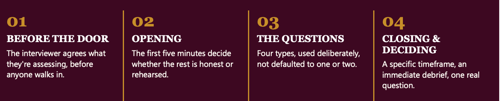
The interview begins when the interviewer decides what they're there to find out, not when the candidate sits down. Before anyone walks in, be able to answer:
What exactly you're assessing: a defined set of criteria, not a general impression.
What good looks like: so it's recognised when it's sitting across the table.
What each stage tests: capability first, then depth, then culture and fit.
Agreeing on this beforehand is one of the most effective, and most overlooked, ways to improve a hire. Define culture fit before you ask about it, too: what does this business genuinely value, and where does that show up. The sharper question isn't just whether someone will fit. It's whether they'll add something to it.
The first five minutes set the tone. A candidate at ease gives honest, detailed answers; one who feels interrogated gives rehearsed ones. Skip “tell me about yourself”, it's the most rehearsed answer in the room. Start with something specific to their background instead, and the conversation moves immediately, while showing them their application was read.
A well-structured interview draws on four question types, each testing something different:
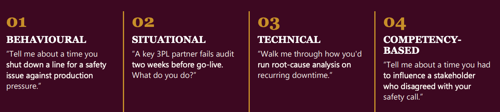
Behavioural reveals what someone's done. Situational tests judgement under ambiguity. Technical checks the method behind the claim. Competency-based tests a defined skill against real evidence. Use all four, deliberately. Relying on just one produces either a great storyteller or a technician with no read on how they'll handle real pressure.
How you close matters as much as the conversation itself. Reserve time for the candidate's questions, it's diagnostic: sharp questions about the business signal real consideration; questions about leave entitlements signal someone who hasn't thought past the offer.
A specific timeframe before they leave: “you'll hear from us by Thursday”, not “we'll be in touch soon”.
An immediate debrief: each interviewer's independent view given before the group discusses, not once consensus has quietly formed.
The sharpest test isn't whether the room wants to hire someone. It's whether they'd be comfortable with that person representing the business in their first week, without a safety net.
An interview isn't just your assessment of the candidate. It's theirs of you, and the best candidates have options. More than half of Australian job seekers, 51%, say they've been ghosted during a job search, never hearing back at all. A clear timeframe, held to, protects more than one relationship: it's how a business is spoken about across an entire professional network

If you're building your team, reviewing your hiring process, or simply enjoy practical insights on leadership and hiring, follow Corine Duke Recruitment or connect with Corine on LinkedIn.