
What to Expect From a Specialist Search What The Role Blueprint changes about a search, and what that means for the person making the hiring decision.
What a client gets is worth being specific about: a market properly mapped, targeted headhunting alongside advertising, a network built over a decade in this space, and a shortlist of genuinely interested, thoroughly vetted candidates presented with real context, not a stack of resumes. One point of contact from the first conversation through to the placement holding twelve months later, with the role as the sole focus until the right person is found. That's the substance behind The Role Blueprint, not a feature list, a genuine understanding of the business built before the search even begins. The method matters. The thinking behind it matters more. Here's what that looks like, stage by stage.
Around 70% of the strongest operations, supply chain and safety talent aren't looking for a job, according to LinkedIn's Talent Trends research. They're settled, performing well, and not thinking about a move. That single fact explains why a critical leadership hire is a different exercise to a standard one, and why the way a search is run matters as much as who eventually fills the role.
A role advertised online only reaches the 30% who are actively looking, often the smaller, more available, less proven part of the market. Reaching the other 70% takes a different kind of search: genuine market knowledge, direct conversations, and enough credibility in that first phone call to be taken seriously by someone who wasn't looking for it.
A handful of factors keep it that way:
They're occupied: often in demanding operational environments, with little room to browse job boards.
Generic ads undersell the role: a settled professional won't risk a conversation for a vague scope.
Cold approaches without credibility go nowhere: a leader who's run a safety system for a decade can tell within a sentence whether the caller understands the work.
Reaching the right person is only half of it. What happens in that first conversation, how clearly the role, culture and business come across, shapes whether a strong leader says yes, they're weighing up the business as much as the role. That takes real credibility, not a position description read aloud, and one point of contact who's fully informed rather than several competing calls about the same opportunity in the same week. It's a calmer process, and it tends to produce a more considered decision.
Every search starts with The Role Blueprint, a structured discovery process that goes beyond the position description into the business problem behind the role, the leadership context and the challenges ahead: what success looks like at twelve months, what's already been tried, what the culture genuinely rewards. Skipping this depth is the most common reason a search underperforms, the target is wrong before it even begins. It's also what makes the later conversation credible: a search built on real understanding sounds different from a generic call about a vacancy.
There's also an advantage that comes from time, not just method. A decade in operations before a decade in recruitment across the same sectors means direct relationships with a large number of the leaders already working in this space. For a portion of any search, the first call isn't cold. It's to someone already known.
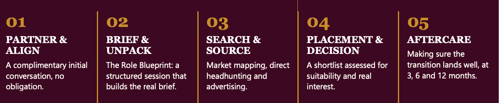
Every engagement runs as a single, committed partnership: one recruitment partner fully accountable, not managing this brief alongside five others racing the same shortlist. Every candidate introduced is someone believed to be right for the role, by someone who sat in The Role Blueprint session and understands the brief first-hand. And the search doesn't end at the offer. A hire that looks right on paper and hasn't settled by month six hasn't worked, so every engagement includes structured check-ins through the first twelve months, the point at which it's clear whether the placement strengthened the team.

If you're building your team, reviewing your hiring process, or simply enjoy practical insights on leadership and hiring, follow Corine Duke Recruitment or connect with Corine on LinkedIn.