
Practical positioning for operations, supply chain and safety professionals moving into their next leadership role.
A resume's first job is getting someone past the door, not proving an entire career in one document. If it doesn't earn that first conversation, nothing else on the page gets read by anyone. The best resumes aren't the longest or the most polished. They're the clearest about the handful of things that matter, and honest about the rest. A career, like a resume, benefits far more from clarity than volume. Here's how to put that into practice, on the page.
A resume built straight from a position description is the easiest place to start, especially at leadership level, where someone might not have touched theirs in ten years. The PD is right there, the duties already written down. The harder part is remembering the impact behind those years. One habit worth building well before a resume is ever needed: at the end of each year, note down the two or three things that genuinely mattered. It makes an enormous difference when it's finally time to put a career onto one page.
Eye-tracking research into how recruiters screen resumes finds a resume gets a first look of only a few seconds, most of it landing on name, title and dates rather than the detail underneath. Every word needs to earn that pass.
“Managed a 65-person production floor across two shifts” describes a job. “Reduced downtime 18% across two shifts inside twelve months” describes a result. The first is true of dozens of candidates. The second is true of one. Every role should answer a single question: what changed because this person was there.

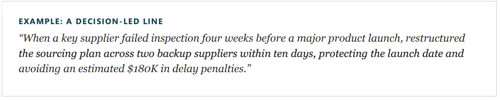
Hiring managers want to know how someone thinks under pressure, not just what they've technically done. A line describing a decision made under real constraint, and what followed, says more than a paragraph of responsibilities ever will.
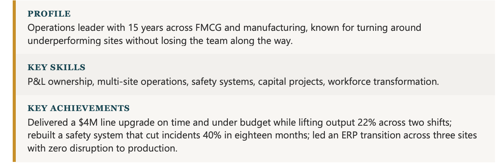
The top of page one carries more weight than any other part of the document. Worth checking before anything else: current contact details, not one left over from an old employer. An incorrect number is often reason enough for an application to be passed over entirely. After that, the first page has one job: give a reader the whole shape of a career before they reach the role history, a short professional statement in someone's own words, a handful of key skills, three career-defining achievements with real impact, and the specifics that matter, industries, systems, qualifications, budgets managed. The last two roles deserve real detail; everything before that can compress to a few lines. A twenty-year career told with equal weight throughout reads like nobody's had a promotion in a decade.

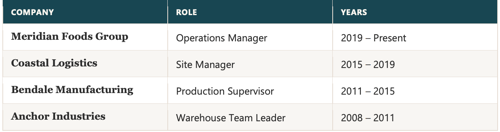
Someone with fifteen or twenty years and several employers benefits from one more thing: a simple table showing company, role and years. It gives a reader the shape of a career in one glance. Keep it to the roles that matter, the last four or five is usually enough, and keep the formatting plain.
Responsibility describes the scope of the job. Achievement describes what changed because someone was accountable for it. Both belong on the page, but they read best kept separate, and a handful of genuine achievements per role, three is usually enough, says more than a dozen would.

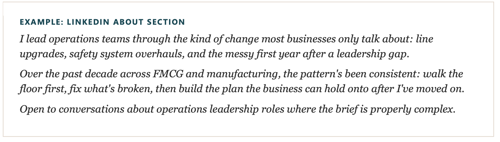
A LinkedIn profile is increasingly part of how someone gets assessed, sometimes before a resume, sometimes alongside it. A headline that just repeats a job title wastes the most visible line on the page, it should say what someone does and for whom. The About section is the only place written in someone's own voice, and a generic three-line summary misses that chance entirely.
White space alone has been shown to lift reading comprehension by as much as 20% in controlled studies. Short bullet points, well spaced, beat blocks of text every time. It's worth building for the system too: many applications pass through tracking software before a person sees them, and heavy formatting, graphics, nested tables, can be misread or dropped entirely. Recruiters scan for signal, not volume, a resume that's honest about what was achieved, in fewer words, outperforms one that lists everything a role ever touched.

Sources: Ladders, Eye-Tracking Study on recruiter resume-screening behaviour · Wichita State University research on white space and reading comprehension.
If you're weighing your next move, thinking about how you're positioned in the market, or simply enjoy practical insights on careers and hiring, follow Corine Duke Recruitment or connect with Corine on LinkedIn.